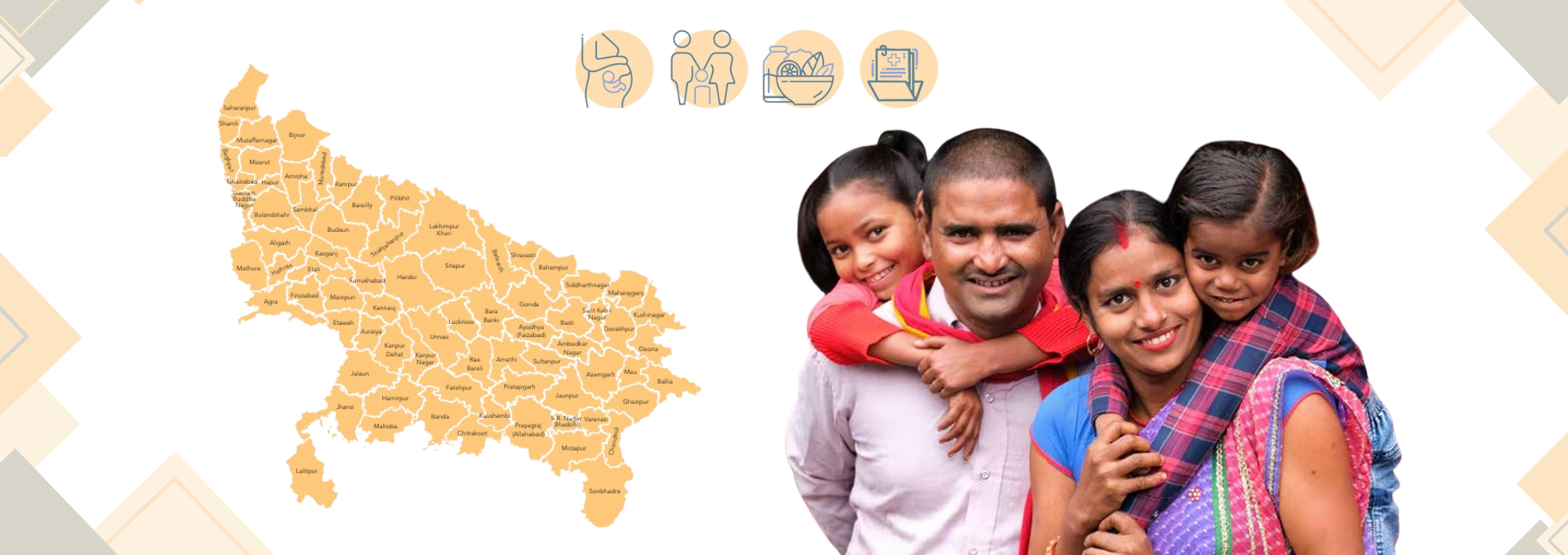
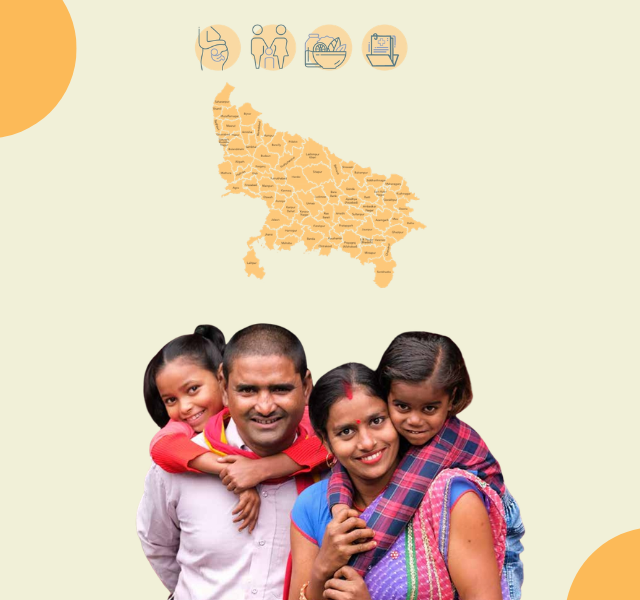
The Uttar Pradesh Technical Support Unit (UP TSU) provides techno-managerial support to the Government of Uttar Pradesh to improve reproductive, maternal, newborn, and child health and nutrition outcomes and reduce health inequities across the state. Led by the Institute for Global Public Health, University of Manitoba, in partnership with IHAT and other consortium partners, and funded by the Gates Foundation, the UP TSU now supports all 75 districts and 820 blocks in Uttar Pradesh.
Using a Program Science approach, the UP TSU works across community, facility and health-systems platforms to strengthen the effective coverage of critical services. Its model combines problem identification, piloting innovations, scaling up successful interventions, and continuous learning and dissemination. The programme is designed to address gaps in service readiness, quality, access and demand, with a strong equity and gender lens.
The programme brochure highlights a wide range of interventions. At the community level, these include aligning Anganwadi and ASHA catchment areas, strengthening antenatal care through Village Health Sanitation and Nutrition Day sessions, providing digital support through eKavach for citizen registration and follow-up, and integrated RMNCHN counselling. At the facility level, the UP TSU has supported in-service mentoring of nurses, strengthening of newborn care, and mentoring of doctors and specialists through Regional Resource Training Centres. At the systems level, support has included improving human resources for health, strengthening public health supply chains, enabling data-driven decision-making, advancing digital health systems, and supporting social and behaviour change communication.
Overall, the UP TSU represents a large-scale technical support platform that helps the Government of Uttar Pradesh translate evidence into stronger health systems and better RMNCHN outcomes for women, children and families. It shows how embedded technical assistance can connect policy, service delivery, and system strengthening to improve care quality, reach underserved populations, and support state-wide health goals.