


The ‘Quality Rating’ reform marks a transformative step toward strengthening the quality and credibility of nursing and paramedical education in Uttar Pradesh. Implemented by the Uttar Pradesh State Medical Faculty (UPSMF) in collaboration with the Quality Council of India (QCI), the program aims to establish a standardised and transparent framework to evaluate institutional performance and encourage continuous improvement.
Read More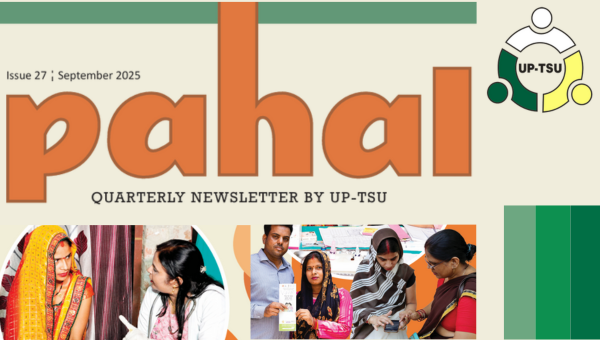
PAHAL Issue 27 highlights UP TSU’s ongoing partnership with the Health Department and ICDS to strengthen public health services across communities, facilities, and health systems in Uttar Pradesh. This edition brings together diverse programmatic efforts spanning reproductive, maternal, newborn, child, & adolescent health and nutrition services, family planning, TB, supply chain management, and social and behaviour change communication.
Read More
This paper highlights the redesign of Uttar Pradesh’s medicines supply chain through lessons adapted from Tamil Nadu’s Medical Supplies Corporation. By establishing seven foundational pillars—including centralized procurement, quality control, warehousing, and digital e-tracking—the Uttar Pradesh Medical Supplies Corporation strengthened system efficiency, accountability, and medicine availability, offering valuable insights for other Indian states and similar global contexts.
Read More
The Uttar Pradesh Exemplar Report highlights the state’s substantial progress in reducing maternal and newborn mortality between 2000 and 2018, achieving greater improvement than most other high-mortality states in India. These findings are part of the Exemplars in Maternal and Newborn Health Study, research that aims to understand positive outliers and inform policy and practice.
Read More
IHAT implements the Tuberculosis (TB) Diagnostic Network Optimization project in Uttar Pradesh. IHAT works in collaboration with the State TB cell to expand and decentralize rapid molecular testing, optimize equipment placement for enhanced population accessibility and performance of services, thereby increasing coverage and reducing inequities in access to TB diagnostics for individuals accessing TB services in both public and private sectors.
Read More