
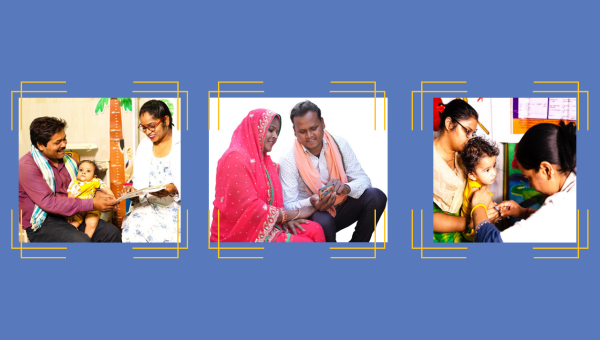
Government of Uttar Pradesh launched the Uttar Pradesh ke Swasthya Kendra (UPkSK) platform in July 2021 to address healthcare challenges exposed by Covid-19 pandemic. Built on the Ayushman Bharat Digital Mission (ABDM) framework, it centralises health facility data, improving resource allocation and service delivery. UPkSK integrates multiple systems, including HR, drug management, and service delivery, serving as a comprehensive digital tool for healthcare management in Uttar Pradesh.
Read More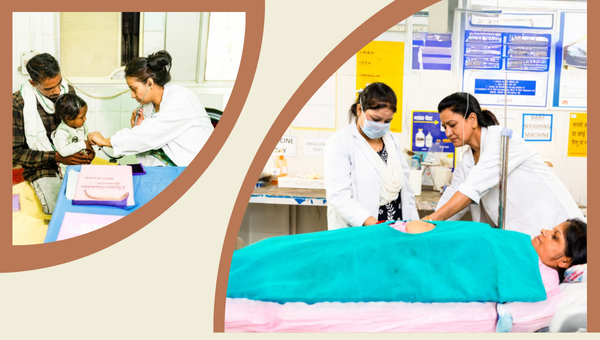
Government of Uttar Pradesh introduced eHRMS (Manav Sampada) to streamline health workforce management by replacing manual processes with a digital platform. Tracking healthcare professionals from recruitment to retirement, Manav Sampada enhances efficiency, transparency, and data-driven decisions. The system consolidates HR functions, including recruitment, transfers, promotions, and performance monitoring, improving workforce management across Uttar Pradesh.
Read More
This paper highlights the implementation of Manav Sampada, an electronic Human Resource Management System (eHRMS) in Uttar Pradesh, India, aimed at addressing health workforce shortages and inequities across one of the world’s largest public health systems. It demonstrates how an integrated, lifecycle-based digital platform improved human resource data quality, performance review, training allocation, and workforce distribution. The paper emphasizes e-HRMS’s potential to strengthen workforce management and align with India’s Ayushman Bharat Digital Mission for enhanced service delivery and health outcomes.
Read More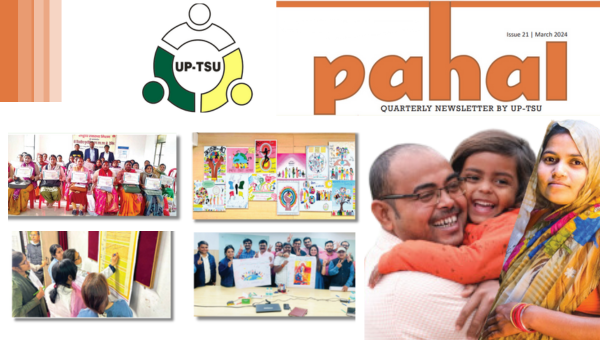
This issue of PAHAL serves as a comprehensive reflection of UP-TSU’s support to GoUP spanning facility enhancements, systemic reforms, and community outreach initiatives. Through this, we have endeavoured to address the diverse challenges impeding equitable healthcare access for all.
Read More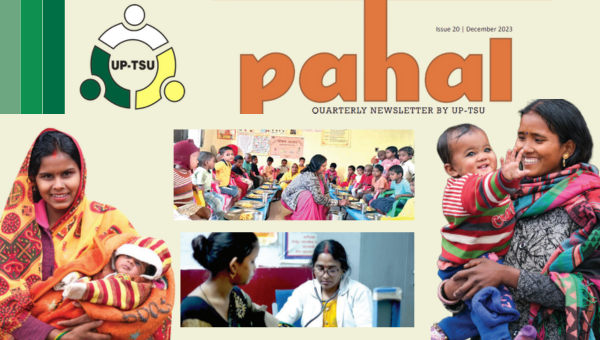
The 20th edition of the PAHAL is a 5-year milestone edition and is a testament to our team’s dedication and hard work as we continue to support GoUP towards making strides in public health at the facility, system, and community levels. This edition showcases some of the key initiatives that have been driving positive change in our organization and the communities we serve.
Read More